
Surah Al-Mulk: The Surah That Watches Over You at Night
If you have ever heard that there is one Surah the Prophet ﷺ never skipped before sleeping, this is it. Surah Al-Mulk, also called Tabarak, takes under five minutes to recite. Scholars describe it as a surah that will argue on your behalf in the grave. That mix of short but heavy is exactly why it stays one of the most recited chapters of the Quran, night after night, across the world.
This page is your starting point. Below you will find what the surah is, what its name means, a preview of its opening verses, and why it carries the weight it does. From here, you can move into the full Arabic text, a complete translation, the PDF, or the recitation of well-known Qaris.
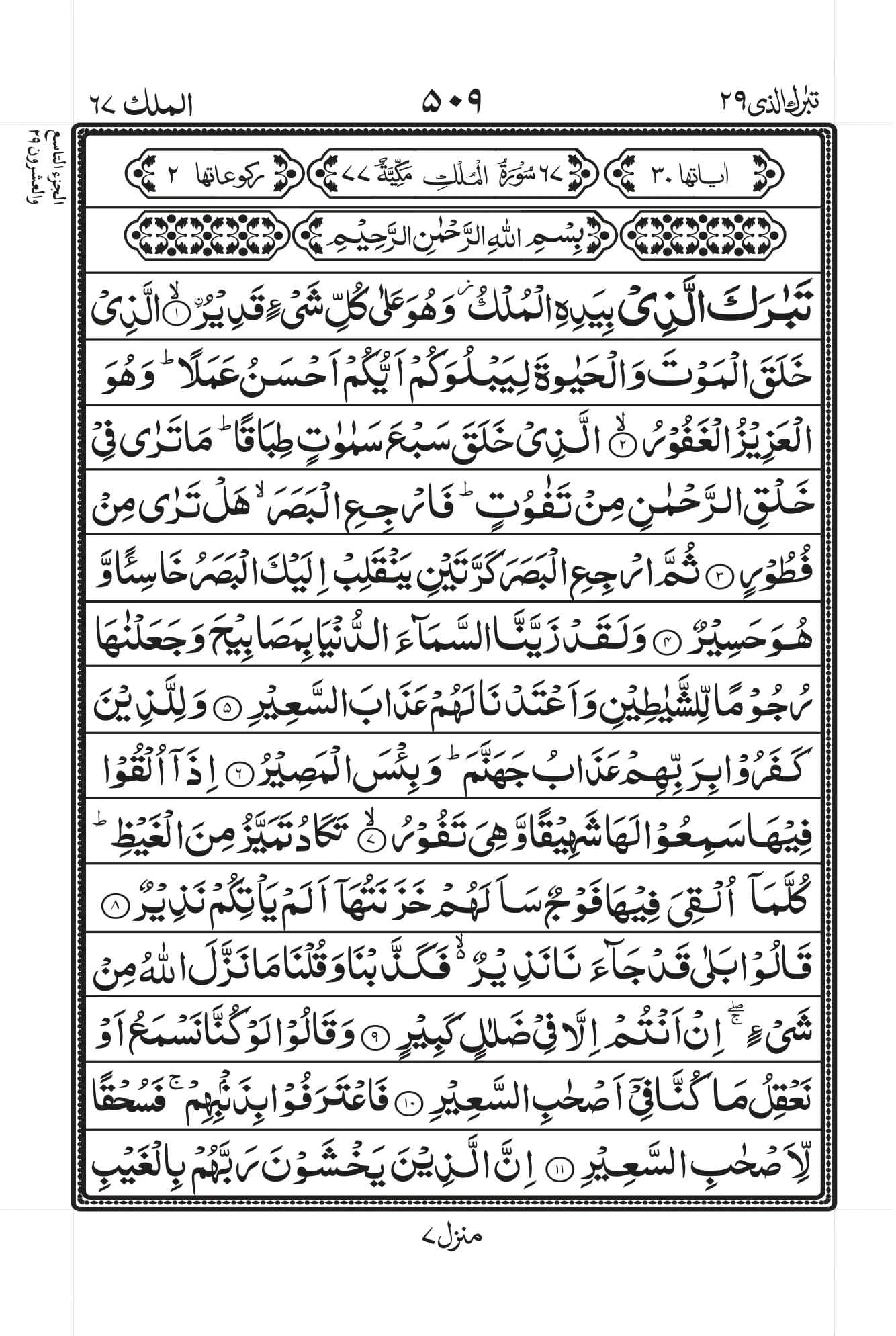
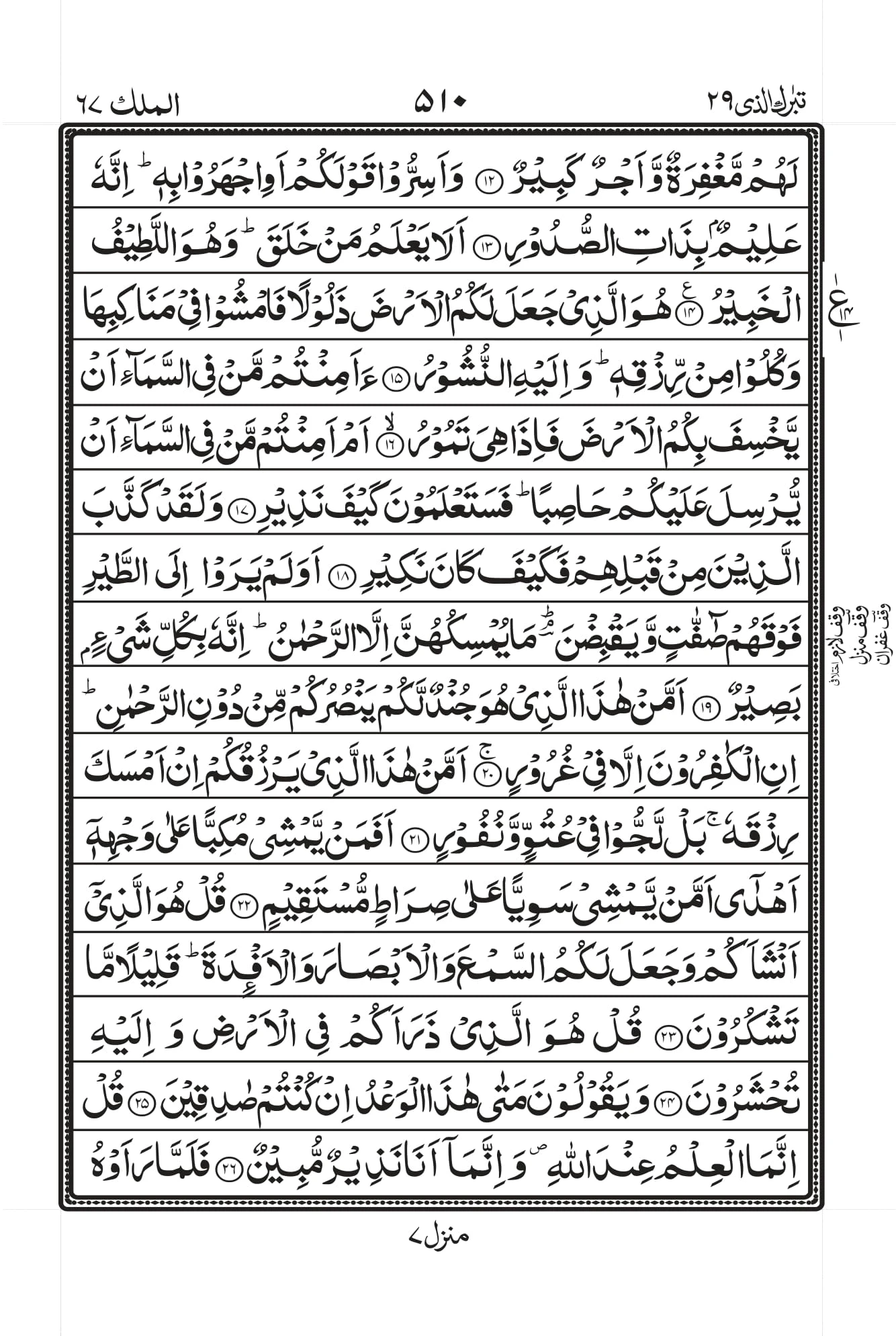
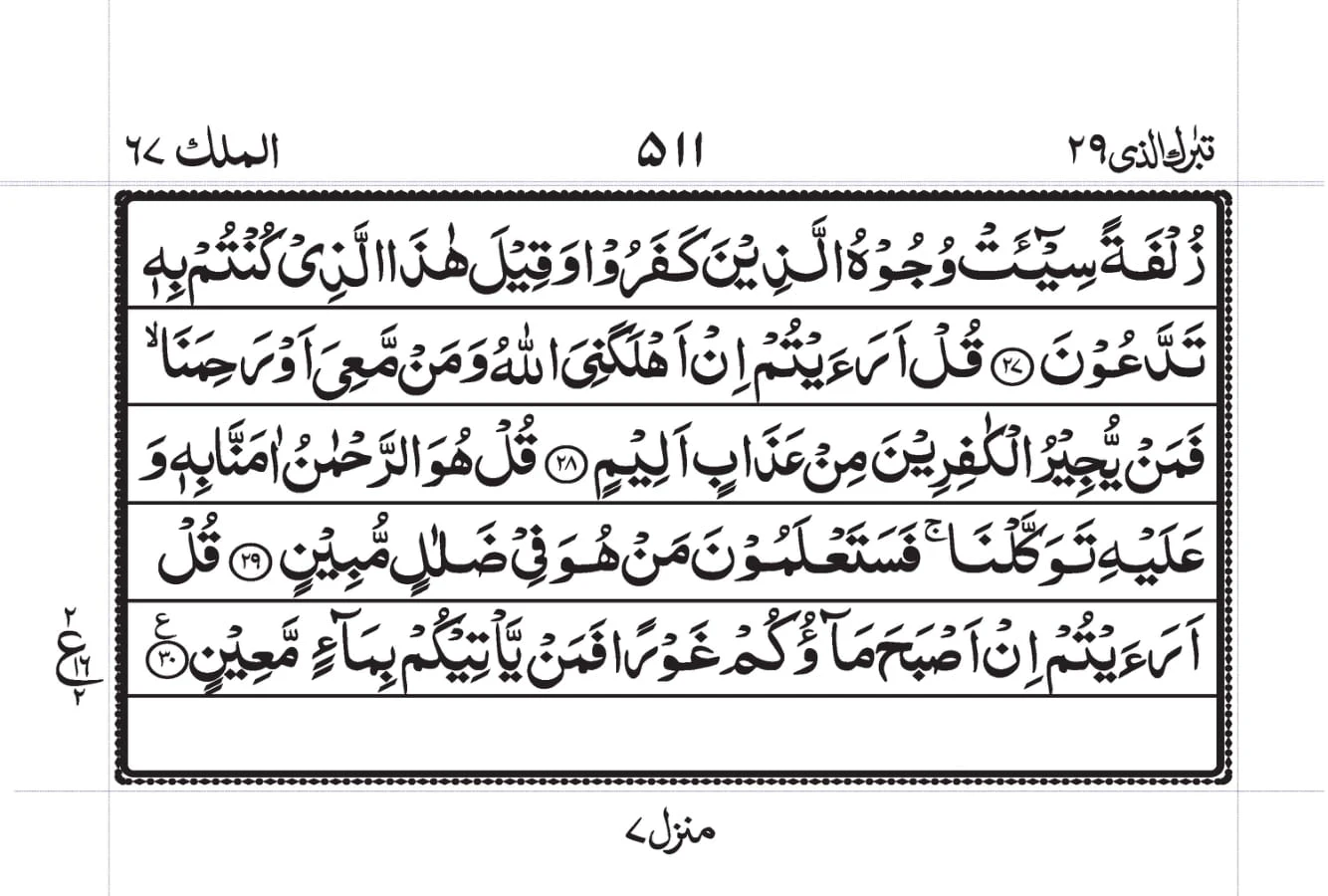
Quick Facts About Surah Al-Mulk
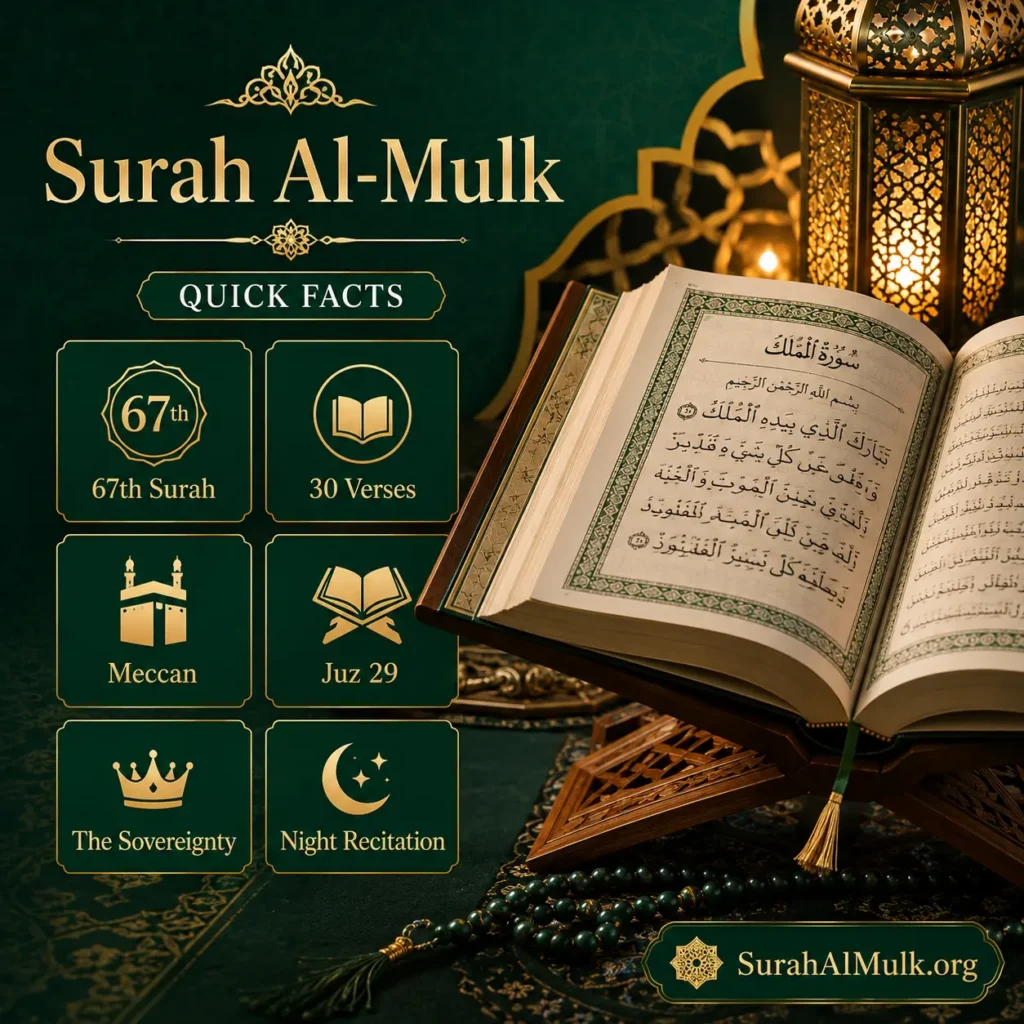
Surah number | 67th Surah of the Quran |
Number of verses | 30 ayat, in 2 Rukus |
Place of revelation | Makkah (Meccan surah) |
Location in the Quran | Opens the 29th Juz (Para) |
Meaning of the name | The Sovereignty, or The Dominion |
Other names | Tabarak, Al-Mani’ah (The Protector), Al-Munjiyah (The Rescuer) |
Average reading time | 5 to 7 minutes |
Why Is It Called Al-Mulk, and Why Tabarak
The surah opens with the word Tabarak, meaning Blessed is He, followed almost immediately by the word Al-Mulk, meaning dominion or sovereignty. Both names come straight from that opening line. Surahs in the Quran are usually named after a striking word from their first verses, not because the name sums up everything inside, and that is exactly the case here.
The surah picked up two more names over time, and these come from Hadith literature rather than the Quran itself. Al-Mani’ah means the one who protects. Al-Munjiyah means the rescuer. Both names exist because of what this surah is reported to do for someone who recites it regularly. It protects them from the punishment of the grave. More on that below.
A Glimpse Into the Surah
Here is how it opens.
Verse 1
تَبَارَكَ الَّذِي بِيَدِهِ الْمُلْكُ وَهُوَ عَلَىٰ كُلِّ شَيْءٍ قَدِيرٌ
Tabarakal-lazi biyadihil mulku wa huwa ala kulli shay’in qadeer
Blessed is the One who holds all authority in His hand. His power has no limits.
Verse 2
الَّذِي خَلَقَ الْمَوْتَ وَالْحَيَاةَ لِيَبْلُوَكُمْ أَيُّكُمْ أَحْسَنُ عَمَلًا ۚ وَهُوَ الْعَزِيزُ الْغَفُورُ
Allazi khalaqal mawta wal hayata liyabluwakum ayyukum ahsanu amala, wa huwal azeezul ghafoor
He is the One who designed life and death as a test to see which of you acts best. He is mighty, yet endlessly forgiving.
That sets the tone for the whole surah. Short, direct sentences that keep circling back to one idea. Everything you see, from the stars above to your own ability to hear and see, belongs to a Creator who is watching how you use it.
Want to read the whole thing? Read the full Arabic text of Surah Al-Mulk, or get it in English or Urdu.
What Is the Surah Actually About
Strip away the verse numbers, and Surah Al-Mulk presents a single argument in three parts.
First, it points to the sky and the stars in verses 1-5. If you cannot find a single flaw in the precision of creation, that tells you something about who made it.
Second, it describes what disbelief leads to in verses 6-11 and again in verses 25-30. The regret of those who realize too late that they ignored every warning sign is vividly described.
Third, it turns the focus back to you, in verses 12 to 24. Your hearing, your sight, your ability to walk on the earth, and earn a living. None of it is owed to you, and all of it can be taken away as easily as it was given.
It is a Meccan surah, revealed when the early Muslim community was small and under heavy pressure. That urgency shows in the language. Short verses, sharp questions, and no room left for staying comfortable in indifference.
For a full verse-by-verse breakdown, see our Surah Al-Mulk Tafsir.
Why People Recite It Every Night
This is probably why you landed on this page. Reciting Surah Al-Mulk before sleeping is not a cultural habit that grew on its own. It traces back to the Prophet ﷺ himself.
Abu Hurairah reported that the Prophet ﷺ spoke of a thirty-verse surah in the Quran that keeps pleading for its reciter until they are forgiven. This is preserved in Sunan Abu Dawud and Jami at-Tirmidhi, and scholars have linked it directly to Surah Al-Mulk because of its exact verse count.
A separate report from the companion Ibn Mas’ud, recorded in Sunan al-Nasa’i, describes the surah as being known among early Muslims as the protector, recited nightly for protection from the punishment of the grave. Another narration in Jami at-Tirmidhi tells of a man who pitched his tent over a grave without knowing it, then heard a voice reciting this very surah from beneath the ground. The Prophet ﷺ later confirmed that the surah shields its reciter from the torment of the grave.
There is also a broader principle worth knowing. Several hadith describe a multiplied reward for every letter recited from the Quran, not specific to this surah alone, which adds to why steady recitation, letter by letter, carries weight beyond the meaning itself.
None of this makes the surah a magic formula. Scholars are clear that its benefit comes from belief and reflection, not just from moving your lips over Arabic. But the consistency of these reports is exactly why hundreds of millions of Muslims do not skip it at night.
Read the complete picture, including the related hadith, on our Benefits of Surah Al-Mulk page.

How to Read, Listen, or Save Surah Al-Mulk
Pick whatever fits how you want to engage with it.
Frequently Asked Questions
A Note on How This Content Is Put Together
Every translation and explanation on this site is checked against established scholarly works, including Tafsir Ibn Kathir and Kanz-ul-Iman, rather than being written and published without review. You can see exactly which sources we rely on and how content is reviewed on our Editorial Policy and Sources page.